


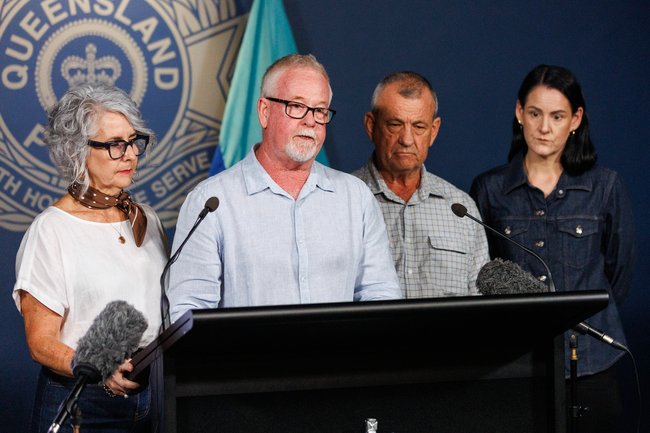
More than five decades after teenager Marilyn Wallman was murdered, police have quadrupled the reward for information leading to her killer’s arrest and conviction.
One expert believes changing loyalties, guilt and the offer of indemnity could finally prompt someone to come forward but another had their doubts.
Queensland Police Service (QPS) announced the increase on Wednesday, raising the reward in the 54-year-old cold case from $250,000 to $1 million.
Know the news with the 7NEWS app: Download today
Police are also offering indemnity against prosecution to an accomplice, provided they were not the person who committed the murder and are the first to provide the information.
Associate Professor Xanthe Weston, from CQUniversity’s Queensland Centre for Domestic and Family Violence Research, said a financial incentive of this scale could be decisive for someone weighing the risks of speaking out.

“A reward of $1 million is life-changing money,” Weston said.
“For someone who has carried this information for years, it can be the push that makes speaking up feel worth the risk.”
She said relationships and loyalties could look very different after half a century.
“Marriages end, friendships fall apart, people move away, and the person they were protecting may have died or no longer has any hold over them,” Weston said.

What happened to Marilyn Wallman
Marilyn vanished on March 21, 1972, while riding her bicycle to catch a school bus at Eimeo, near Mackay.
About 10 minutes later, her younger brothers, David and Rex, found her bicycle beside Wallman Rd, its basket detached, school bag open and books scattered across the road.
Her remains were identified in 2001, after a bone fragment discovered near McGregor Creek at Mount Martin in 1974 was subjected to DNA testing.
Investigators also established an aqua-coloured 1965 or 1966 HD or HR Holden sedan with a white roof had been seen in the area around the time she disappeared.

This could give someone holding a secret ‘a way out’
Weston said a person’s sense of responsibility could shift as they grew older.
“Guilt on the other hand can deepen over time, so people who held on to information when they were young see things very differently once they have children or grandchildren of their own,” she said.
“Especially in a case involving a 14-year-old girl.”
Weston also highlighted the provision for an accomplice who was not directly responsible for the murder.
“The indemnity may be the most important part of this announcement,” she said.
“The person who knows the most is often the one with the most to lose, and this gives them a way out.”
No evidence between linking a higher reward to solving the crime
University of Queensland criminologist Associate Professor Renee Zahnow was more cautious about the financial incentive, saying there was little evidence that increasing the amount of a reward led to more information.
“However, there is little empirical evidence that rewards, or increasing the value of rewards actually works,” she said.
Zahnow said the financial reward was aimed at witnesses, while indemnity could give an accomplice a separate incentive to come forward.
“The accomplice would not be offered the monetary reward only indemnity, while the money is targeting people who might have seen or heard information.”

Zahnow said renewed publicity could be more significant, bringing the case back into public conversation and potentially prompting new information.
“However, what does work is publicity and getting people talking about the case again, which offering a large reward like $1 million does.”
She said people who may have witnessed Marilyn’s disappearance could now be in their 70s, with their circumstances and concerns potentially very different.
“Previously they may have been concerned for the safety/wellbeing of their family but now perhaps they live alone.
“Or previously they may have been concerned about losing their job, but now they have retired.”
The reward applies to information directly leading to the arrest and conviction of the person responsible and remains available until December 30, 2026.
An accomplice who was not the actual killer may also be offered indemnity against prosecution.
Police say Marilyn’s family have never given up hope of answers.

‘For far too long, Marilyn’s family have lived with the pain’
Detective Senior Sergeant Tara Kentwell from the Cold Case Investigation Team said the investigation into Marilyn’s disappearance remained active, more than 54 years later.
“For far too long, Marilyn’s family have lived with the pain of losing their daughter and sister to Rex, David and Lenore, without knowing what happened to her or who was responsible,” Kentwell said.
“For any parent, not knowing what happened to their child is their worst nightmare. Marilyn’s family have never given up hope of finding answers, and they deserve to know the truth.
“We believe there are people out there with information. Relationships, circumstances, and loyalties change, and I would encourage anyone with information to contact police.
“Detectives will explore every line of inquiry in hope of finally getting justice for Marilyn and providing answers to her family”.
Anyone with information is urged to contact Crime Stoppers.


